
Localized Fulfillment Strategy For US Brand Expansion in 2025
Learn how Product Information Management centralizes product data, reduces errors, and supports omnichannel consistency for seamless customer interactions.
October 1, 2026

Product Information Management (PIM)
Product Information Management (PIM) allows ecommerce and retail businesses to manage all data related to their products in a centralized location. It improves data management and provides a top-tier customer experience. See how a PIM makes your business more competitive.
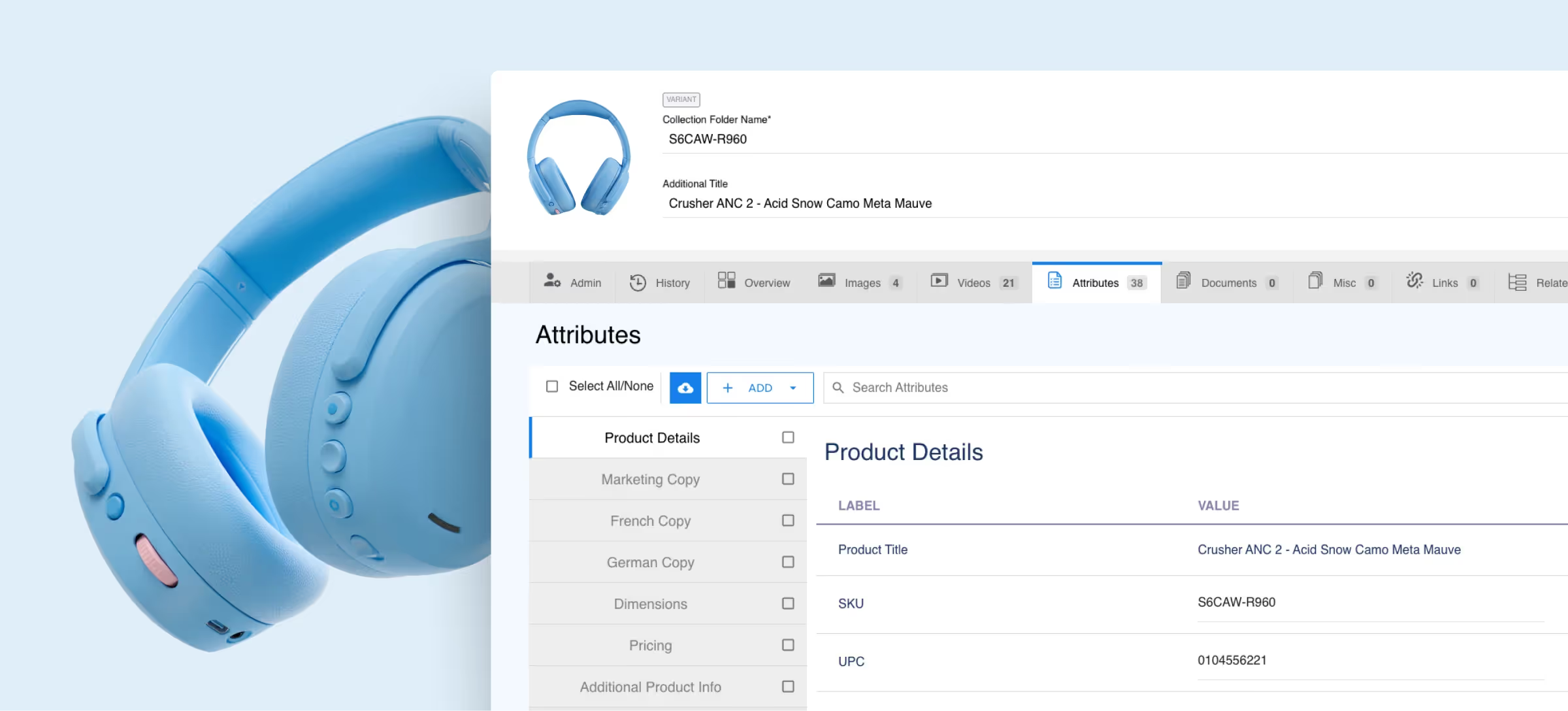
Product Information Management (PIM) is a system or process that manages, organizes, and centralizes product data in a single location. It allows internal teams and stakeholders to collect, store, and enrich accurate product information across various channels and customer touchpoints.
PIM systems are widely used in ecommerce, retail, and multi-channel marketing to ensure that product information is consistent, timely, and up-to-date. This is essential, as more than a third of the world’s population buys online. A PIM system allows internal and external stakeholders to process, update, and publish product data more quickly and collaborate more efficiently.
The goal of PIM is to support seamless, reliable product information distribution at scale. This helps internal teams save time, avoid the risks of manual data entry, and enable a consistent brand experience for customers across channels.
As your ecommerce, retail, or multi-channel marketing business outgrows legacy systems and paper-based products and starts to compete more rigorously with digitally-native marketplaces, PIM becomes integral in keeping up with the speed of business and maintaining internal alignment. It also helps ensure that you provide the same customer and brand experience across various channels and customer touchpoints, which is increasingly important for building customer trust.
Additionally, businesses used an average of 112 SaaS apps in 2023 (up from 12 in 2016). With the growing usage of SaaS tools, internal teams use function-specific software that stores siloed data. As a result, business-critical product data is often scattered across multiple tech systems, and each team works from a different data source when making crucial decisions. It also means updating product information takes longer than necessary and is prone to inaccuracy.
Most businesses depend on digital infrastructure to sell and serve their customer base, making cloud-based PIM systems essential to running a competitive business. PIM systems unify and enrich various sources of product information and take the responsibility of manually updating product information off internal teams’ plates, reducing the tedium of data entry and the possibility of human error.
PIM centralizes product information from multiple sources and ensures that up-to-date information is readily available for internal teams and paying customers.
Some of the core and essential functions of PIM systems include:
PIM collects and synchronizes data from various sources. It ensures that all data across various marketing and sales channels is up-to-date, accurate, and ready to use at any time.
Rather than individually formatting product information for every sales channel, PIM systems distribute tailored product information based on each channel’s data requirements.
When using spreadsheets and manual data entry, internal teams run the chance of inaccurate or outdated information, leading to a poor customer experience. PIM systems update information in real time and enable immediate adjustment to product data across all channels.
PIM systems also improve data governance. Instead of giving everyone free reign to update information at will, PIM systems include user roles and permissions that regulate data access and allow teams to collaborate without risking data conflict or duplication.
To ensure that all product information is up to date, PIM systems automatically check for completeness and accuracy of product information and flag errors or missing data so team members can resolve them quickly.
Some advanced PIM systems streamline data management further by using AI to automate tasks like tagging, categorization, and error-checking.

PIM systems store all kinds of data essential for managing and marketing products effectively across channels.
Some examples of data PIM systems store include:
By centralizing different types of data, a PIM system allows brands to access and distribute consistent, enriched product information to meet customer and compliance needs across all platforms.
A PIM system brings together internal teams and enables seamless collaboration through a centralized source of data and product information.
PIM supports the following internal teams and stakeholders:
Ecommerce managers are responsible for ensuring consistent product listings across channels. A PIM system streamlines this process by reducing the time spent on manual data updates. It also helps improve customer experience by maintaining detailed, accurate product information.
PIM systems’ centralized view of product data helps product managers maintain better product life cycle management. It also ensures that new product information is quickly and accurately available across channels.
A PIM system allows marketing managers to easily and efficiently update content and targeted marketing across different platforms. It also helps them enhance customer trust by launching campaigns with uniform, brand-aligned product information.
With PIM, content managers can easily organize, update, and distribute product descriptions, images, and specifications. PIM systems also reduce errors and duplications, supporting a more streamlined content workflow.
Through a PIM system, sales teams can access accurate and up-to-date product details, which empowers them to answer customer questions more confidently. This boosts their efficiency and allows them to spend more time closing deals rather than verifying product information.
Supply chain managers benefit from the real-time visibility into product data that PIM systems provide. This enables efficient inventory tracking and order management while supporting accurate data sharing with suppliers and partners and reducing delays.
A PIM system allows digital merchandisers to update and optimize product displays quickly across all online storefronts. This ensures that customers always see the best possible version of each product.
PIM ensures that brand messaging is consistent across all product listings and channels. By centralizing content updates and enforcing brand guidelines, PIM helps maintain brand integrity and provides a strong brand experience.
PIM’s data integration and governance features reduce the complexity of managing product information across multiple systems. This helps IT and data management teams improve data quality and accessibility for all departments.
With PIM, customer support teams can quickly access accurate product details needed to assist customers effectively. This reduces response times and boosts customer satisfaction.
PIM also supports the following key industry verticals:
Retail and ecommerce businesses rely on PIM to manage high volumes of product data across marketplaces, improving speed to market and consistency across listings. It helps attract and retain customers by ensuring product information is always accurate.
In manufacturing, PIM is used to manage detailed specifications, compliance data, and multi-channel distribution. It streamlines communication with suppliers and retailers, reduces errors, and improves overall efficiency.
PIM systems allow wholesalers and distributors to manage complex product catalogs with detailed specifications and images, ensuring partners have the latest product information for faster decision-making.
For consumer goods companies, a PIM system can help maintain brand consistency and regulatory compliance across all product listings by simplifying data sharing with retailers. This also helps brands deliver a strong consumer experience.
PIM supports fashion brands managing detailed attributes like size, color, and materials, ensuring each product shows up accurately across channels. This also helps them make updates more quickly and seamlessly manage seasonal launches.
PIM is essential for maintaining compliance and detailed product descriptions, ensuring both professionals and end consumers have access to consistently accurate information. This enhances trust and reliability in highly regulated markets.
PIM systems help streamline operations, enhance customer experience, and drive sales growth. Here are some other benefits of PIM.
A PIM system centralizes product information, reduces errors, and helps ensure that customers, sales teams, and marketplaces always have access to the most up-to-date data. This consistency strengthens brand trust and helps avoid costly mistakes.
With PIM, teams can eliminate manual data entry and quickly access the information they need, freeing up time for strategic tasks. The system’s automation and real-time updates allow staff to manage large volumes of data seamlessly across various channels.
By automating and simplifying data syndication, PIM speeds up the process of launching products across channels and regions. This accelerated timeline enables brands to capitalize on market opportunities faster and stay competitive.
PIM allows brands to deliver a consistent product experience across all touchpoints, from websites and marketplaces to in-store displays. High-quality, accurate product information supports informed purchasing decisions and fosters loyalty.
PIM systems are built to support localization, with features that handle multilingual data, regional specifications, and currency conversions. This flexibility allows brands to expand globally with ease and ensures local markets receive tailored product information.
PIM integrates with other critical systems like ERP, DAM, and ecommerce platforms, creating a seamless data flow that enhances efficiency across departments. This interoperability ensures that information is always consistent across the entire tech ecosystem.
Analytics and reporting tools within a PIM system provide insights into data quality, sales performance, and customer engagement. These insights enable brands to optimize product listings, effectively target specific markets, and refine their overall strategy.
With centralized data management and fewer manual processes, PIM systems reduce costs associated with data errors, duplicate entries, and redundant tools. Over time, these cost savings contribute to a more efficient, streamlined workflow.
These benefits make a PIM system an invaluable asset for businesses looking to grow, improve operational efficiency, and meet customer expectations in a data-driven, omnichannel world.
There’s no one-size-fits-all PIM solution. The right one for your organization will depend on a number of conditions, including data requirements, the complexity of your product variants, and global reach, among other factors.
When choosing a PIM system for your business, consider the following:
It’s important to secure support from business leaders who oversee revenue and ROI. PIM can impact operational efficiency, data quality, and scalability to meet higher-level business goals.
As your company grows, it will likely rely on clean, accurate, consistent data for decision-making and operations. A PIM system can help you organize this data and ensure your team has access to the highest quality data.
Companies with fewer and simpler product variations will have less need for a robust PIM system. However, scaling and high-growth businesses with multiple product variants and different physical and technical attributions will require PIM to organize and simplify variant management.
For businesses with a global presence, it’s important to choose a PIM that supports localization across languages and regions so you can deliver accurate, market-ready content worldwide.
If your products align with seasonal changes, trends, or tech advancements, you need a flexible PIM with automated processes to help you stay agile and keep product information current.
Consider your data sourcing and integration needs. A good PIM solution should offer smooth data integration and collaboration with external sources to reduce delays and errors.
Omnichannel selling is essential for most modern businesses. If you sell across multiple platforms, look for a PIM that enables consistent product data distribution and updates across all channels. This helps ensure you provide a cohesive customer experience.
It’s also important to keep in mind the difference between proprietary and open-source PIM systems. While open-source solutions can offer more flexibility in terms of access to source code and third-party integrations, proprietary PIM are less customizable and amendable to software integrations.
Product information management (PIM) stores, organizes, and manages product data so everything is accurate and up-to-date. Product experience management (PXM), on the other hand, puts it all together to ensure seamless customer experience.
Both master data management (MDM) and PIM centralize and store essential business data. While PIM handles all product-related data, MDM manages other key business data, such as financials, customer data, and even employee payroll.
Data asset management (DAM) systems can be considered part of PIM systems. Whereas DAM handles assets like images, videos, and media files essential to the product life cycle, PIM manages all those in addition to other pertinent product information like descriptions, technical data, and regulatory information.
The difference between PIM and enterprise resource planning (ERP) tools is a matter of scope. While ERP systems take a broader view of company data — everything from product stock levels to supply chain data — PIM systems focus on product-specific information.
Localized Fulfillment Strategy For US Brand Expansion in 2025
Learn how Product Information Management centralizes product data, reduces errors, and supports omnichannel consistency for seamless customer interactions.
October 1, 2026

3PL eCommerce Fulfillment
Learn how Product Information Management centralizes product data, reduces errors, and supports omnichannel consistency for seamless customer interactions.
October 1, 2026

Scalable D2C Fulfillment
Learn how Product Information Management centralizes product data, reduces errors, and supports omnichannel consistency for seamless customer interactions.
October 1, 2026
No, a PIM (Product Information Management) system is distinct from an ERP (Enterprise Resource Planning) system. While ERP systems manage overall business operations, like inventory, finance, and human resources, PIM specifically focuses on collecting, managing, and distributing product-related data across channels, ensuring data consistency and quality in customer-facing environments.
Product information resides within the PIM system as a centralized repository. The PIM acts as the "single source of truth" for all product data, storing essential details, technical specifications, media assets, and localized content, which can then be shared and updated across various platforms and channels.
Yes, most modern PIM systems, including Pattern’s PIM, are designed to integrate seamlessly with various tools and platforms like ERP, DAM, CRM, ecommerce platforms, and third-party data sources. These integrations ensure smooth data flow, reduce manual data entry, and allow for real-time updates, making it easy to keep product information consistent and up-to-date across your entire tech stack.