The Three Phases of Online Marketplace Internationalisation
May 26, 2021

Marketplaces have become an increasingly important route to market for brands who want to grow their international online sales. In this blog, we share the three key phases to online marketplace internationalisation that every consumer brand will go through during its journey to full localisation into new markets.
Cross-border online sales have grown significantly in recent years, and the global e-commerce market is forecast to surpass $6 trillion USD by 2024. However, launching in new markets is a complex process which requires expert knowledge and a willingness to invest to reach scale.
Our newly launched Marketplace Internationalisation Checklist highlights what consumer brands need to think about when considering whether marketplaces should be a key channel within their international ecommerce strategies.
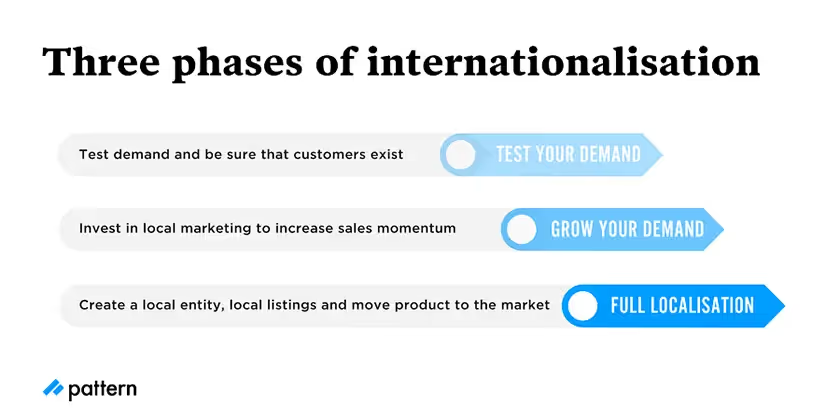
Three phases of online marketplace internationalisation
1. Test your demand
Entering new markets however is no easy task. A brand that resonates in its domestic market may not do so in its target market. For this reason, we recommend that brands test for demand in the new market to be sure that customers exist.
A simple way to do this is through cross-border sales via marketplaces. By selling cross-border your products will be readily available in markets that previously might have required a localisation strategy; providing a shortcut to marketplace internationalisation for many brands.
2. Grow your demand
Once you’ve established that there is demand for your products in your target market, you can begin to increase your profile. Investing in local marketing - while still selling cross-border - is one way to increase sales momentum.
Running local marketing campaigns in your target market with native content can help with demand generation. Engaging with influencers on popular social media channels provides plenty of opportunities for brand awareness and drives customers directly to your sales channels.
3. Full localisation
Finally, localizing your proposition is the third phase of online marketplace internationalisation. Create a local entity, local listings on marketplaces and move product to the market to fulfil orders once demand warrants this investment. You may also consider launching a localised direct-to-consumer site or partnering with third-party retailers as a means to full localisation. Many brands who choose to sell their goods via marketplaces often work with an authorized seller to execute this phase of marketplace internationalisation.
For more information on how we could support you in developing your international ecommerce strategy, or if you are interested in us becoming the authorized marketplace seller for your brand anywhere in the world please contact us today.
Latest blogs to check out.

.png)